
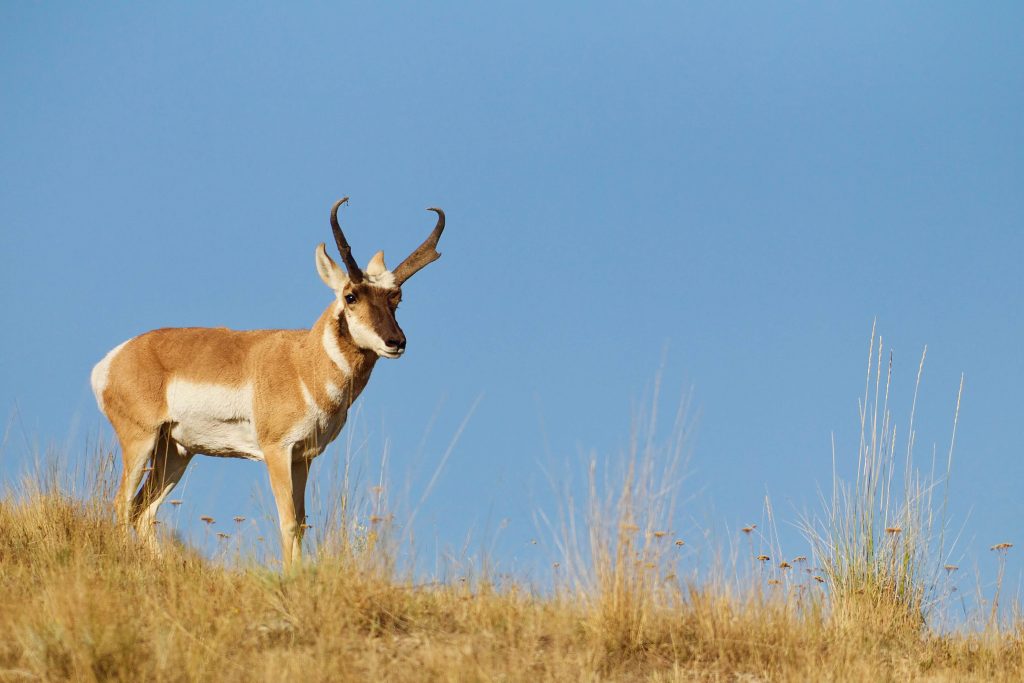
Kansas holds one of the few pronghorn seasons east of the Rockies, and it runs on a draw system that catches most out-of-state hunters off guard. The pronghorn, often called antelope, is native to North America and was once nearly as numerous as bison across the western three-fourths of the state. By the early 1900s, unregulated harvest had pushed them to the far western counties, and trap-and-transplant work began in 1964 to rebuild what had been lost. Today, about 2,000 pronghorn live in the westernmost two to three tiers of counties in Kansas, and the season that surrounds them is one of the most tightly managed big-game opportunities in the central United States.
The season is short, the permits are limited, and the firearm draw is open to Kansas residents only. If you are planning a Kansas pronghorn hunt, the application deadline comes in late spring, well before the season opens in fall. Missing that window means another year of waiting and building preference points, so knowing the calendar ahead of time is not optional.
What Antelope Hunting in Kansas Really Looks Like
Pronghorn in Kansas live on shortgrass prairie in the far western counties. The main management units for firearm and muzzleloader hunting cover parts of Sherman, Thomas, Wallace, Logan, Gove, Trego, Greeley, Wichita, Scott, Lane, Ness, Hamilton, Kearny, Finney, Gray, Hodgeman, Ford, Stanton, Grant, Haskell, Morton, Stevens, Seward, Meade, and Clark counties. This is sprawling, open country with long sightlines and limited cover, which defines the hunting style more than anything else. Long glassing sessions, careful stalks across flat terrain, and distance shots are standard, not the close-cover hunting most Kansas hunters associate with deer and pheasant.
The Kansas Department of Wildlife and Parks authorizes about 170 firearm and muzzleloader permits per year across three management units. A separate archery unit covers a broader geographic area, and those permits are available over the counter without entering the draw, making archery the more accessible entry point for hunters who have not yet built preference points in the system.
The first Kansas pronghorn season ran in 1974 with 80 permits available, and 70 animals were harvested that year. The current population supports a consistent, managed season, though the total number of permits remains tightly controlled because the amount of suitable shortgrass prairie habitat in the state is genuinely limited. Landscape changes, including the conversion of native prairie to cropland and increased tree growth from fire suppression, have made it difficult to expand the huntable range.
2026 Antelope Hunting Dates in Kansas
The Kansas Department of Wildlife and Parks has set the following season dates for 2026. Always verify directly with KDWP before purchasing permits, since dates can shift year to year.
| SEASON TYPE | DATES |
|---|---|
| Archery | September 19 through September 27, 2026 |
| Muzzleloader Only | September 28 through October 5, 2026 |
| Firearms | October 2 through October 5, 2026 |
The firearms season runs four days. That is not a typo. If you draw a firearm permit, you get four days to close the deal, and that window overlaps slightly with the tail end of the muzzleloader season. Archery runs nine days and opens two weeks earlier, giving bow hunters the best conditions of the three seasons in terms of time on the ground. The muzzleloader window gives hunters a short lead before rifles are legal, which appeals to those who want a middle ground between archery challenge and firearm reach.
The legal limit is one pronghorn of either sex per permit, regardless of season or weapon type. Hunters who draw a firearm permit may also use archery or muzzleloader equipment during the corresponding seasons, but archery permit holders are restricted to archery equipment only throughout the season.
Who Can Apply and What It Costs
Resident Hunters
Kansas residents can apply for firearm or muzzleloader permits through the annual draw, which runs from May 12 through June 12, 2026. Resident archery permits are available over the counter throughout the year at an additional cost. Applications and preference point purchases must both be completed online at Go Outdoors Kansas within that window, since KDWP does not accept late applications for any reason.
Application and permit fees for 2026 are listed below. Fees do not include applicable agent and transaction fees:
- General resident firearm or muzzleloader application: $60.00
- Resident landowner or resident tenant application: $35.00
- Resident youth application (age 15 and under): $20.00
- Resident archery permit: $50.00
- Resident landowner or tenant archery: $25.00
- Resident youth archery: $10.00
- Preference point only (no permit application): $10.00
Nonresident Hunters
Firearm and muzzleloader permits are restricted to Kansas residents, with one exception: a nonresident who qualifies as a registered tenant on Kansas land may apply for a resident firearm permit at the nonresident tenant rate of $95.00. All other nonresidents are limited to the over-the-counter archery permit, which is available year-round without entering the draw.
- Nonresident archery permit: $300.00
- Nonresident youth archery (age 15 and under): $100.00
- Nonresident tenant archery: $85.00
If you are a nonresident considering pronghorn hunting in Kansas, archery is your realistic path unless you own or hold a qualifying lease on land within the state. That is a meaningful distinction worth understanding before you plan a trip, since a $300 over-the-counter archery tag is a very different commitment than expecting to draw a firearm permit in a competitive resident-only draw with limited tags.
How the Preference Point System Works
Preference points carry forward year to year and determine draw priority. Every applicant who does not draw a permit receives one point added to their file automatically at the close of the draw period. When the number of applicants with the highest preference point totals still exceeds the available permits for a specific unit, KDWP holds a random drawing among those tied applicants to determine who receives a tag.
Several rules govern how points accumulate and expire. You can only earn one preference point per year, purchased during the May 12 through June 12 application window. If you do not apply for or purchase a preference point for five consecutive years, all accumulated points reset to zero with no exceptions. Once you successfully draw and use a firearm or muzzleloader permit, your points also reset to zero, and you cannot buy a preference point and also apply for a permit in the same year.
Building points early makes the most practical sense if you want to hunt pronghorn before your accumulated points expire. Hunters with several years of points in the bank have a meaningfully better chance in the draw, particularly in the most competitive units where demand has consistently outpaced the available permit pool year after year.
How Group Applications Work in Kansas
Groups of up to five applicants can apply together for the same unit and weapon type, with the draw evaluating the entire group based on the lowest preference point total among its members. If you do not want to hunt unless your partners also draw, this is the mechanism that protects that preference.
- The entire group draws together, or nobody draws. If any member fails, no permits are issued to the group.
- All members must apply for the same unit and the same weapon type. Mixing archery and firearm applicants in a single group application is not permitted.
- The group is ranked by the lowest preference point total in the group, not an average. One member with zero points pulls every other member down to zero for draw purposes.
- The first applicant to apply creates the group and receives a group number. Every subsequent member enters that number and joins the existing group during their own online application.
- Payment runs on the group leader’s credit card by default unless individual members update their own payment information after the group has been formed.
What to Carry When You Hunt
Before hunting antelope in Kansas, make sure you have the required license, permit, and certification with you in the field. These items need to be in your possession while hunting, and tagging rules must be followed immediately after harvest.
- Valid Kansas hunting license
- Signed antelope permit
- Hunter education certification if you were born on or after July 1, 1957
- Certification card in the field if you are under the age of 27
- Signed and dated carcass tag after harvest
- Clear plastic bag to protect an online permit tag
- Written transfer notice if any meat is given to another person, including the donor’s name, signature, address, and permit number
Pronghorn must be tagged before the animal is moved from the kill site. The tag should stay attached until the animal is processed, transferred, or otherwise disposed of.
Public Land vs Private Land for Kansas Antelope
Western Kansas pronghorn habitat sits mostly on private land. Some Wildlife Area ground falls within the management units, but the open country where pronghorn range at scale is privately held ranch land. Hunters who draw firearm permits will spend a meaningful amount of time working access permissions before the season opens, and anyone treating a Kansas pronghorn draw like a public land elk hunt in Wyoming is going to be frustrated by how quickly the accessible acres run out.
KDWP’s Walk-In Hunting Access program does include some western Kansas ground, but coverage in shortgrass pronghorn country is considerably thinner than in the pheasant country of central and north central Kansas. The WIHA tracts that fall within or near the management units see significant pressure during the short firearms window, which reduces their practical value for hunters who want a genuine stalk opportunity. Private access is the standard approach for serious pronghorn hunters in this state, which means either owning land, holding a qualifying lease, or doing the relationship work with landowners well before the season opens. When evaluating hunting land in the western management units, it is worth asking specifically whether the seller has pronghorn permit history on the property and whether KDWP classifies any of the acreage as landowner-eligible for permit purposes, since the landowner and tenant fee structure is significantly lower than the general resident application fee.
Kansas Antelope, Mule Deer, and Big Game Draws
If you are building a western Kansas big game strategy, pronghorn and mule deer often occupy the same ground. Hunters who combine a mule deer draw application with pronghorn preference point building can sometimes make one early-October scouting trip serve both animals, reducing the overall time and travel cost of chasing both species. Our Kansas elk hunting guide covers how the state’s other limited-draw big game systems work, including the Fort Riley permit structure and how the preference point differences between species play out over time. Reading it alongside this guide gives you a clear picture of how Kansas manages its limited big game inventory across multiple species in the same draw cycle.
The recreational land we work with in western and central Kansas includes properties in and near the antelope management units, and when a parcel sits in documented pronghorn range, that changes how we position it and how a buyer should think about what they are actually gaining access to. The pronghorn range is not something you can create through habitat work. It is a function of landscape and existing population, which makes the location of a parcel within or adjacent to a management unit a genuine differentiator when we bring those properties to market.
References