
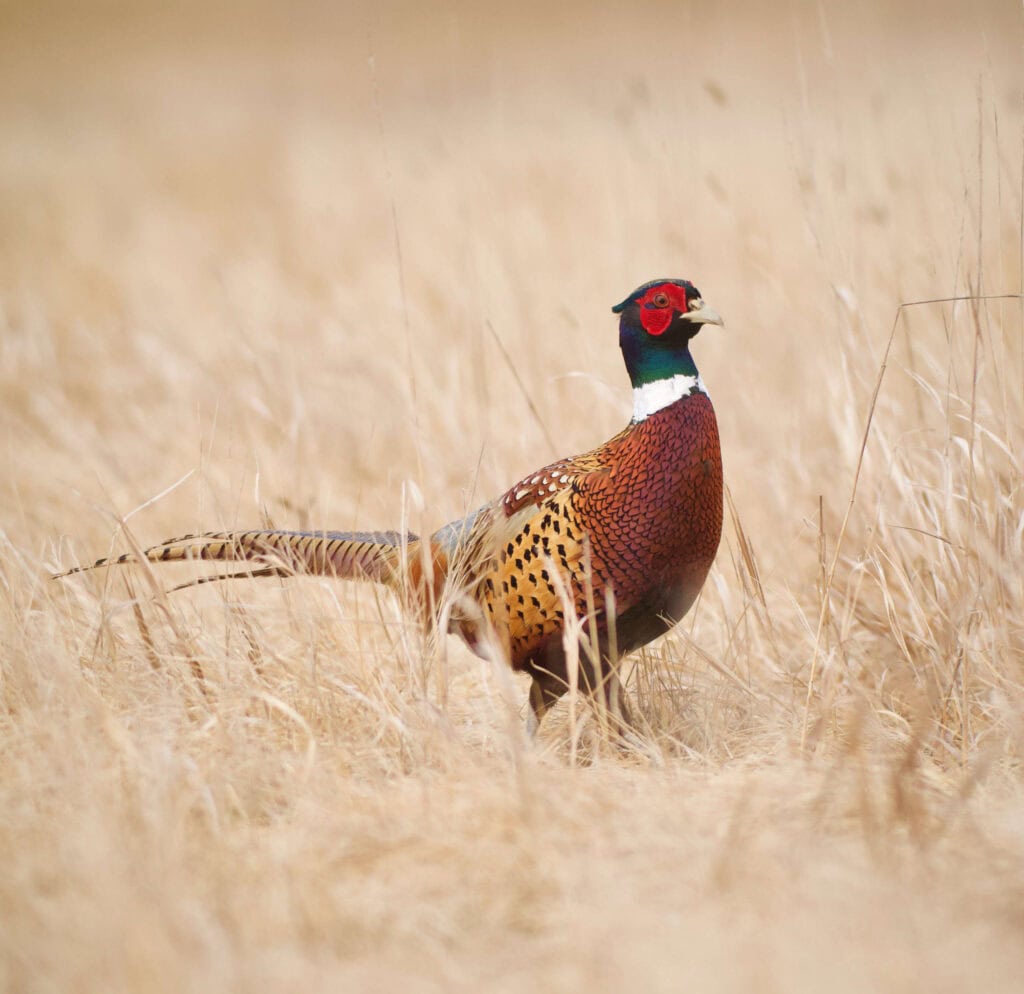
Key Takeaways
- Kansas pheasant season runs November 8, 2025 through January 31, 2026.
- Daily bag is 4 roosters, with a possession limit of 16 after four days.
- Resident license runs $27.50. Non-resident is $127.50, plus a $2.50 HIP permit for both.
- Top counties include Pratt, Kingman, Stafford, and the areas around Cheyenne Bottoms.
- Western and central Kansas hold the heaviest bird numbers across mixed grain and grassland country.
Kansas ranks among the best states in the country for chasing ringnecks. The state has earned this reputation through decades of habitat management, strong bird populations, and over 1.7 million acres of public hunting access. This total includes more than 1 million acres in the Walk-In Hunting Access program, plus state Wildlife Areas and federal lands. For anyone serious about pheasant hunting, Kansas delivers.
The state offers something for everyone. You can walk vast CRP grasslands on public ground through the Walk-In Hunting Access program. Or you can book guided hunts at established lodges where dogs work thick cover and bird numbers run high. Some hunters prefer the challenge of wild birds. Others want the extended season and reliable shooting that Controlled Shooting Areas provide. Red Cedar Land Company works with land buyers throughout Kansas who want Kansas land for sale that supports both agricultural operations and quality hunting opportunities. We see firsthand how the right piece of ground can serve multiple purposes for farmers, ranchers, and outdoor enthusiasts alike.
Kansas Pheasant Hunting Season and Bag Limits
The 2025-2026 regular season runs from November 8, 2025, through January 31, 2026, statewide. A youth season opens two days earlier on November 1-2, giving younger hunters first crack at the birds before the crowds show up. Most hunters find the best action during the first three weeks after opening day and again after snow arrives in mid-December.
Controlled Shooting Areas operate under different rules. These licensed private operations run from September 1 through April 30. CSAs release pen-raised birds into quality habitat, creating reliable hunting when wild bird seasons close. These areas work well for groups, first-time hunters, or anyone wanting to train dogs outside the regular season. The extended timeline and managed bird releases mean you can plan hunts around your schedule rather than scrambling to get out during the short November-to-January window.
Bag and Possession Limits:
- Daily bag limit of 4 roosters
- Only male pheasants can be taken during the regular season on public and most private land
- Hens can be harvested at CSAs only
- The possession limit is 16 roosters after four days of hunting
- All transported birds must keep one foot or wing attached to prove sex
Kansas Pheasant Hunting Regulations You Need to Know
Licensing and Permits
A key Kansas hunting regulation is that all hunters need a valid Kansas hunting license and HIP registration before heading into the field. Nonresidents pay $127.50 for a full hunting license while residents pay $27.50. The Harvest Information Program (HIP) permit is not free. As of 2025, the HIP permit costs $2.50. It is mandatory for all migratory bird hunters (which includes doves, but is often purchased by upland hunters) and is typically added when you purchase your license. CSA permits offer a cheaper alternative at just $27.50 for nonresidents. These permits work only on licensed Controlled Shooting Areas. You do not need a regular hunting license if you hunt exclusively on CSAs.
Legal Equipment
Most Kansas pheasant hunters carry 12-gauge or 20-gauge shotguns. Shot sizes between #4 and #6 work well for pheasants. Some areas require steel shot instead of lead, so check local regulations before your hunt. Blaze orange is not legally required for upland bird hunting in Kansas. The only exception is if you hunt on KDWP-managed public lands during firearm deer season. Even then, it is still smart to wear orange for visibility and safety.
Land Access Rules
Kansas offers over 1.7 million acres of total public hunting access. This includes more than 1 million acres through the Walk-In Hunting Access program, plus state Wildlife Areas and federal lands. WIHA properties are private lands leased by the Kansas Department of Wildlife and Parks for public hunting.
WIHA tracts are marked with signs showing boundaries and access dates. Some properties open on November 1, while others open later in the season. Legal shooting hours for pheasants are from one-half hour (30 minutes) before sunrise to one-half hour (30 minutes) after sunset. You cannot drive vehicles off established roads or paths. No baiting or electronic calls are allowed on public land.
Private land hunting always requires permission from the landowner. If the land is not posted with signs or purple paint, verbal permission is legal. If the land is posted, you need either verbal or written permission. Only properties posted as “Written Permission Only” require written permission.
Best Places to Hunt Pheasant in Kansas
North-Central Kansas
Mitchell, Cloud, and Osborne counties hold some of the best wild bird habitat in the state. Rolling hills mixed with CRP grass, grain stubble, and tree belts create ideal conditions for pheasants and quail. You can often find both species on the same property.
Several established outfitters operate in this region. NCK Outfitters manages 4,000 acres of private ground near Clay Center. Scattered Acres runs combo hunts that pair wild bird mornings with CSA afternoon shoots. Rader Lodge offers full-service packages with lodging, meals, and trained dogs. These operations have built strong reputations over decades.
Western Kansas
Large CRP blocks and cut grain fields dominate the western third of Kansas. The open landscape gives hunters long sight lines and big flushes when birds take off. Some properties offer combo hunts for pheasants and mule deer if you want to maximize your time in the field.
Bird numbers can fluctuate based on rainfall and habitat conditions. Good moisture years produce strong pheasant populations. When conditions align, western Kansas delivers outstanding hunting on both public WIHA ground and private ranches. The trade-off is that you need to cover more ground to find birds compared to the north-central areas.
South-Central Kansas
Pratt, Kingman, and Stafford counties sit in grain-rich country where agriculture dominates. Late-season hunters do well here after snow pushes birds into heavier cover near food sources. The mix of crop stubble, grass waterways, and shelterbelts holds birds through January.
This region sees less hunting pressure than areas farther north. That can mean better opportunities for hunters willing to put in time scouting and walking the ground. The Kansas Department of Wildlife and Parks maintains several WIHA tracts throughout the area.
Public Land Hotspots
Glen Elder Wildlife Area sits in north-central Kansas and provides reliable mid-season action. The habitat supports both pheasants and quail which makes it popular with upland hunters. Bird numbers stay consistent here through most of the season.
Cheyenne Bottoms near Great Bend offers diverse cover near wetlands. Birds concentrate in this area after cold fronts move through. Cimarron National Grassland in the southwest provides remote hunting for experienced wingshooters who can handle big country and long walks between flushes.
Proven Pheasant Hunting Strategies
Early Season
Hunt field edges near milo, corn stubble, and sorghum during November. Birds feed actively in the morning and late afternoon before heavy pressure pushes them deeper into cover. Use a dog to work close and controlled so you can take makeable shots when birds flush. Wild birds run before they flush, especially after the first few days of the season. Keep your hunting group tight and walk deliberately. Three to four hunters with a dog or two can cover ground while maintaining enough control to get shooting opportunities.
Mid-Season
Pheasants move to cattail sloughs, fencerows, and thick native grass by December. They find warmth and protection in heavier cover as temperatures drop. Walk slowly and let the dogs work crosswind to scent birds before they flush. Roosters hold tighter in cold weather than they do in November. Skip the high-traffic WIHA tracts that get pounded every weekend. Mid-day hunts can produce strong flushes because fewer hunters are in the field.
Late Season
In January, pheasants group up and hold tight in the best available cover. Focus on heavy CRP, creek bottoms, and south-facing slopes where birds can find food and shelter. Walk quietly and pay attention to late-day feeding movements between roost sites and grain fields. Winter storms make birds easier to locate because they concentrate near accessible food sources. After a few days of hard weather, pheasants need to feed, and they move into areas where waste grain remains available.
Guided vs Wild Bird Hunting in Kansas
| Guided Hunts | Wild Bird Hunts |
| Include lodging, meals, dogs, and guides | Require your own planning, scouting, and gear |
| Provide consistent shooting opportunities | Success depends on bird populations and hunting skills |
| Cost $450-$675 per hunter per day | Costs limited to license, travel, and lodging |
| Works well for groups or nonresidents | Offer more challenge and personal satisfaction |
| Available through established operations like Rader Lodge, NCK Outfitters, Scattered Acres, and Spearpoint Ranch | Accessible through over 1.7 million total acres, including WIHA, Wildlife Areas, and federal lands |
Controlled Shooting Areas sit between these two options. They offer extended seasons from September through April. Birds are pen-raised and released into managed habitat, creating reliable action without the full cost of guided lodge hunts. The CSA permit costs only $27.50 compared to a full nonresident license at $127.50. These areas work well for training young dogs, introducing new hunters to the sport, or extending your season when wild bird hunting closes at the end of January.
Frequently Asked Questions About Kansas Pheasant Hunting
When does the Kansas pheasant hunting season start and end?
Regular season runs November 8, 2025, through January 31, 2026. Youth hunters get November 1-2. Controlled Shooting Areas operate September 1 through April 30.
How many pheasants can you shoot per day in Kansas?
Daily bag limit is 4 roosters. Only male pheasants are legal during the regular season. The possession limit is 16 roosters after four days of hunting.
Do I need a hunting license for pheasant hunting in Kansas?
Yes. All hunters need a Kansas hunting license and HIP registration. Nonresident licenses cost $127.50. CSA permits cost $27.50 and work only on Controlled Shooting Areas.
What is the best time of day to hunt pheasants in Kansas?
Morning hunts work best when birds feed after leaving roosts. Late afternoon produces good action as pheasants move toward food sources. Mid-day hunts can be productive during mid-season when pressure is lighter.
Where are the best public lands for pheasant hunting in Kansas?
Kansas offers over 1.7 million total acres, including more than 1 million acres through Walk-In Hunting Access, plus state Wildlife Areas and federal lands. Top areas include Glen Elder Wildlife Area, Cheyenne Bottoms, and Cimarron National Grassland. North-central counties like Mitchell, Cloud, and Osborne have strong wild bird populations.
Can you hunt pheasant hens in Kansas?
No. Hens are protected during the regular season. Only roosters can be harvested. Licensed Controlled Shooting Areas are the only exception where both can be taken.
What shotgun and ammo should I use for Kansas pheasant hunting?
Use 12-gauge or 20-gauge shotguns with #4 to #6 shot. Some areas require steel shot. Check local regulations before your hunt.
Is a hunting dog required for pheasant hunting in Kansas?
Dogs are not required but highly recommended. Trained dogs find more birds and recover downed roosters. German Shorthairs work well in open CRP while Springer Spaniels excel in thick cover.
How much does a guided pheasant hunt cost in Kansas?
Guided hunts run $450 to $675 per hunter per day, including lodging, meals, guides, and dogs. Outfitters like Rader Lodge, NCK Outfitters, and Scattered Acres offer various packages.
What is a Controlled Shooting Area in Kansas?
A licensed private operation where pen-raised pheasants are released into managed habitat. CSAs run from September through April. They work well for training dogs, new hunters, or extending your season.