
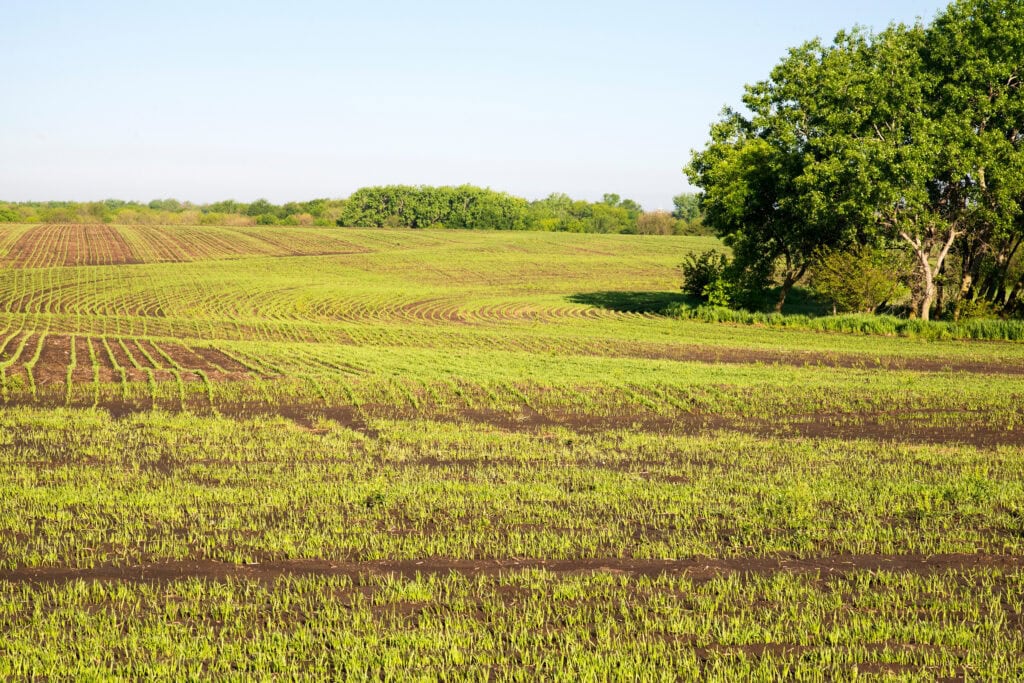
Buying Land in Kansas Starts With a Clear Plan
Buying land in Kansas is not like buying a house in a subdivision. You are buying the soil, the water rights, and every legal issue buried underneath the surface. Skip the homework and you will pay for it later.
Raw land has no home inspection report to fall back on. You are on the hook for zoning, utility access, road frontage, soil quality, and mineral rights yourself. Kansas holds over 45 million acres of farmland and ranks first in total cropland acres nationally. The agricultural and recreational value is real. But when you buy land for sale in Kansas, the gap between a solid deal and a money pit comes down to how much due diligence you do before closing.
Top Use Cases for Kansas Land Investments
High-Yield Agricultural Production
Kansas leads the nation in wheat and grain sorghum, and corn and soybean acreage keeps growing. Cattle operations have been especially profitable, with fed steer prices climbing through 2025.
Hunting and Wildlife Habitat
Deer, pheasant, waterfowl, and turkey draw serious hunters every season. The state has a lot going on from September through February across multiple hunting seasons.
Ranch and Pasture Investment
Eastern Kansas pasture benchmarks were up 4.4% in 2025 according to Frontier Farm Credit. Long-term holders of ranchland have historically seen consistent returns even during lean crop years.
Renewable Energy Leasing
Wind has been the largest source of electricity generation in Kansas since 2019. Landowners leasing for turbines pull in $3,000 to $10,000 per turbine annually, and the turbines take up less than 1% of leased acreage. Solar development is picking up in the west too.
Carbon Credit Opportunities
USDA has put over $3 billion behind agricultural carbon programs through the Advancing Markets for Producers (AMP) initiative, which supports conservation-focused projects across the country. Producers using no-till or cover crops may qualify for per-acre payments or per-ton carbon credit income.
The Pros and Cons of Kansas Land Ownership
| Factor | Benefit | Challenge |
| Soil and Agriculture | Some of the most productive farmland in the U.S. | Soil quality and water access vary drastically east to west |
| Population and Market | Affordable entry points, low competition vs. coastal states | Rural population decline limits local buyer pools in some counties |
| Infrastructure and Access | Strong highway system, established ag supply chains | Remote tracts may lack power, water, cell service, or paved roads |
Kansas gives you flexibility in how you use land. Farm it, graze it, lease it for hunting, or hold it. The flip side is that infrastructure gaps are real in rural counties. Buyers who match the land to a realistic use case do well. Buyers who assume every tract works for every purpose get burned.
Zoning, Legal Access, and Infrastructure
Kansas counties hold their own zoning authority, and rules change the moment you cross a county line. Call the county zoning office directly before you commit. Verify that your intended use is actually allowed, ask about setbacks and lot minimums, and check for any overlay districts or pending zoning changes.
Access is just as important. A dirt path running to a piece of ground does not mean you have the legal right to use it. You need recorded easements that match your planned route, and you need to know if the road is county-maintained or private. Drive the route yourself before closing, in wet weather if you can.
On utilities, running power from a county road to a build site half a mile back can cost $15,000 to $30,000 or more. Call the local electric cooperative, contact the rural water district or get a well estimate, check septic feasibility with the county, and test cell coverage on site. Do all of this before you sign anything.
Soil Quality, NCCPI, and Water Rights
The NCCPI (National Commodity Crop Productivity Index) scores soil from 0 to 100 based on its ability to grow commodity crops. High scores mean higher cash rent and stronger resale value. You can look this up for free through the USDA Web Soil Survey. Flat, well-drained ground with Class I or II soils is the standard for row crop production, and steep slopes or heavy clay limit both farming and building.
Water is the other half of the equation. Kansas water law runs on prior appropriation, meaning first in time, first in right. In western Kansas, where the Ogallala Aquifer has been declining for decades, water rights can be worth more than the land itself. Confirm the water right file number and status with the Kansas Division of Water Resources. Verify well permits, authorized quantities, and check if the property falls in a Groundwater Management District with LEMA conservation requirements.
Mineral Rights and Environmental Checks
Buying the surface does not mean you own what is underneath it. Mineral rights in Kansas can be separated from surface rights, and previous owners may have sold or retained those minerals generations ago. If minerals have been severed, the mineral owner may also have the right to access the surface to extract them. Always have a title professional verify recorded mineral reservations before closing.
On the environmental side, pull the FEMA flood map and check for designated flood zones. Walk the property and look for signs of prior dumping, buried tanks, or chemical containers. Check for erosion along creek banks. A contaminated parcel or flood zone surprise can cost more to fix than the land is worth.
The 5 Main Types of Land for Sale in Kansas
Hunting Land
Kansas is a draw for deer hunting because of the managed unit system and tag allocation. Land with timber, creek bottoms, and food plot potential holds the most value.
Farmland
Row crop ground is priced on soil class and NCCPI ratings. Parcels with active tenant leases give you day-one income. Check historical yield data and cash rent comparables before making an offer.
Ranchland and Pasture
Carrying capacity is the number to know. In the Flint Hills, native grass supports one cow-calf pair per 7.5 to 8 acres for a six-month grazing season. In western Kansas, that stretches to 15 or 20 acres per pair. Fencing, water, and proximity to cattle markets all factor in.
Undeveloped Recreational Tracts
Popular with out-of-state buyers who want a getaway property. Timber, wildlife habitat, and proximity to public land matter. Infrastructure is usually limited and building costs add up fast.
Commercial or Renewable Land
Zoning and proximity to transmission lines are the biggest factors. Wind and solar developers are actively leasing in central and western Kansas, and tracts near substations or transmission corridors command a premium.
Financing Your Land Purchase
Land loans are not home mortgages. Most lenders want 20% to 30% down on raw land, and rates run higher than residential. Agricultural lenders like Farm Credit associations and local ag banks usually have the best terms.
Title insurance is not optional. Run a full search for liens, easements, mineral reservations, and boundary disputes. Know the property tax situation too, especially the current ag-use valuation and what happens to your bill if you change land use.
9 Costly Mistakes to Avoid When Buying Kansas Land
- Relying only on aerial photos and skipping the in-person site visit.
- Assuming the property has utility access because a neighboring tract does.
- Ignoring FEMA flood zone designations.
- Paying asking price without pulling comparable sales and negotiating.
- Overlooking improvement costs like fencing, roads, wells, and buildings.
- Forgetting to budget for annual property taxes, insurance, and maintenance.
- Closing without title insurance.
- Not verifying zoning for your intended use.
- Assuming you own the mineral rights without checking the title chain.
Regional Breakdown: Where to Buy Land in Kansas
- Eastern Kansas gets the most rainfall, has the best crop yields, and holds the highest land values per acre. Kansas City proximity keeps demand steady.
- Central Kansas sits in the transition zone. Mix of row crops, pasture, and CRP ground with more moderate prices and less metro competition.
- Southern Kansas has rolling hills, red soil, and mixed-use ranches. Wichita metro adds value in nearby counties, but further south it opens into ranch country.
- Western Kansas is big acreage and irrigation-dependent farming. Ogallala Aquifer depletion is a real concern for long-term values. If you are buying land in Kansas out west, water right verification is not something you skip.
Is Now the Right Time to Buy Kansas Land
Kansas farmland values have grown at an average rate of about 5.3% per year since 1950, according to K-State Extension. That trend has held through recessions, commodity busts, and rate spikes. The market does not reward people who try to time it. It rewards people who buy the right property at a fair price and hold it.
Focus on the specific tract. Can it produce income through farming, ranching, or leasing? Is there buyer demand in that county if you need to sell later? Those numbers matter more than headline predictions.
Work With a Local Kansas Land Broker
Red Cedar Land works across Kansas counties every week. We know the soil types, the water situations, and how each local market behaves.
- We walk properties and inspect access, fencing, and improvements before listing or showing
- We evaluate every tract for its best use, from row crops to hunting and recreation
- We guide buyers from due diligence all the way through closing
If you are ready to start looking or just want to talk through what is out there, reach out and we will put you on the right piece of ground.
Sources:
- USDA Census of Agriculture, Kansas Profile (2022)
- Frontier Farm Credit, 2026 Farmland Values Update for Eastern Kansas
- K-State Extension, Kansas Agricultural Land Values and Trends (2024)
- K-State Research and Extension, Stocking Rate and Grazing Management
- USDA Advancing Markets for Producers (AMP) Initiative
- Kansas Division of Water Resources, Water Appropriation Act
- Kansas Department of Wildlife and Parks