
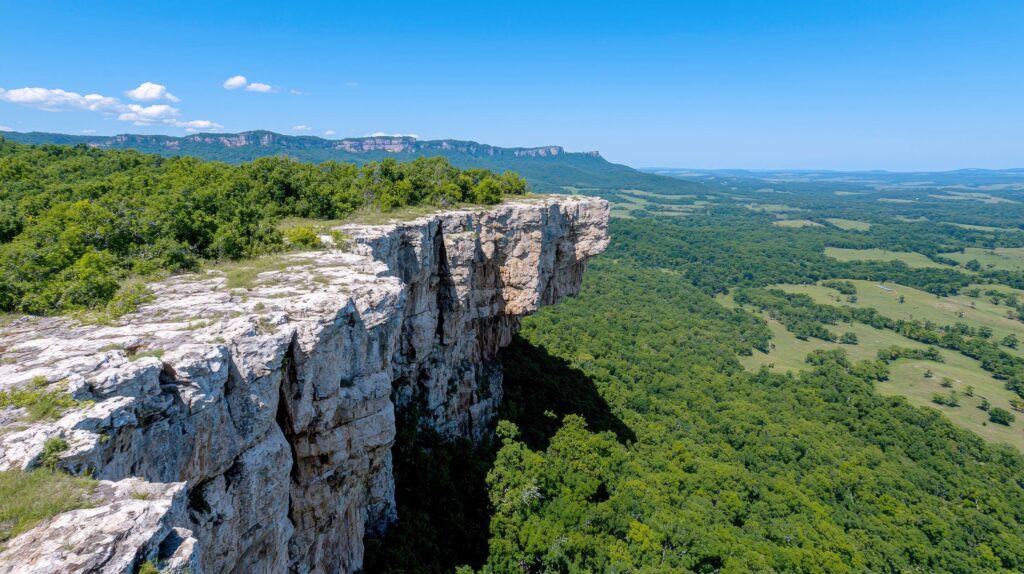
How Kansas Physical Features Affect Land Use and Value
Kansas is not as flat as people think. The state rises from about 680 feet above sea level in the southeast to 4,039 feet at Mount Sunflower near the Colorado border in Wallace County. In between, you get tallgrass prairie, chalk bluffs, sand hills, gypsum deposits, glacial drift, river bottoms, and limestone ridges.
The Kansas Geological Survey divides the state into 11 distinct physiographic regions. The major landforms in Kansas determine what a piece of property can actually do. Rainfall drops from over 40 inches a year in the east to under 16 inches in the west, and that alone changes everything about how land is priced and used. When you are looking at Kansas land for sale, knowing what region it sits in tells you a lot about what it can produce and what it is worth. This guide breaks down the main physical features across the state and connects each one to real decisions about farming, ranching, hunting, and investment.
High Plains of Western Kansas
The High Plains cover the western third of the state. This is Great Plains country, built on Tertiary sediments eroded off the Rocky Mountains millions of years ago. The Ogallala Formation sits underneath, holding the groundwater that makes irrigation possible.
What defines this region:
- Flat to gently rolling terrain above 3,000 feet in elevation
- Mount Sunflower (4,039 feet) is the state high point, but it blends into the surrounding prairie
- Semi-arid steppe climate with 16 to 20 inches of annual rainfall
- Large-scale grain farming and cattle operations on tracts of 640 acres or more
- Strong wind exposure is attracting renewable energy development in Lane County, Greeley County, and the surrounding areas
Irrigated ground commands a serious premium, but the Ogallala Aquifer is declining in many western counties, and water rights directly affect what land is worth. For a broader look at how pricing works, our breakdown of average price per acre in Kansas covers western values in detail.
Smoky Hills and Central Kansas
The Smoky Hills run through the north-central part of the state, where the geology shifts into rolling sandstone and limestone terrain. The Dakota Formation creates sandstone ridges, while the Niobrara Chalk shows up in the western portion. Wilson Lake and Kanopolis Lake are both carved into this mixed geology.
What defines this region:
- The Smoky Hill River flows through and feeds into the Kansas River further east
- Rainfall typically lands between 24 and 30 inches, straddling the humid continental and drier western climate zones
- Supports a mix of farming, grazing, and recreational use
- Properties in Russell County and Ellsworth County sit in this transition zone with enough topography for wildlife and enough flat ground to farm
Buyers looking at central Kansas often want a property that does more than one thing, and the Smoky Hills geography supports that. For more on waterways and property value, our guide to rivers across Kansas covers the systems in this part of the state.
Flint Hills and Tallgrass Prairie
The Flint Hills run north to south through east-central Kansas, from Marshall County down into Cowley County and across into Oklahoma. This is one of the last remaining tallgrass prairie ecosystems in North America. The Tallgrass Prairie National Preserve in Chase County protects a portion of it, but most of the Flint Hills remain in private hands as working ranchland.
Why this region never got plowed:
The geology is Permian-age limestone loaded with chert (flint). That chert makes the hilltops resistant to plowing, which is why this region was never broken out for row crops. The thin, rocky soil is not built for farming, but it grows some of the best native bluestem grass in the country for cattle grazing.
What defines this region:
- Counties like Greenwood County and Chase County sit at the heart of it
- Ranchers run cow-calf pairs and stocker cattle on native grass with consistent demand for grazing leases
- Rolling terrain and creek bottom timber create quality habitat for whitetail deer and upland birds
Buyers interested in hunting ground here can dig into our guides on deer hunting in Kansas and Kansas hunting regulations.
Arkansas River Lowlands
The Arkansas River starts in the Rocky Mountains of Colorado and cuts through southern Kansas. Cities like Garden City, Dodge City, and Wichita all developed along this corridor. The lowlands create an alluvial plain with some of the most productive irrigated farmland in the state.
What defines this region:
- Flat terrain and deep alluvial soils are built for row crop production
- Corn, soybeans, wheat, and grain sorghum all perform well when water is available
- Properties in Barton County, Pawnee County, and surrounding counties reflect that productivity in pricing
- The Wellington-McPherson Lowlands near Wichita in Sedgwick County are a separate but adjacent physiographic region, also built on alluvial deposits
- Proximity to Kansas City and Wichita puts development pressure on some tracts closer to metro areas
Red Hills and Gypsum Hills
The Red Hills sit in south-central Kansas, running from roughly Barber County westward. The name comes from red-colored sedimentary rocks laid down during the Permian Period. Iron in those sediments oxidized over time and gave the soil its rust color. Gypsum deposits are common, and sinkholes form where gypsum dissolves underground.
What defines this region:
- Cattle country with rolling terrain better suited for pasture than row crops
- The Cimarron River and Medicine Lodge River cut through portions of the region
- Big Basin Prairie Preserve in Clark County has some of the best-known sinkhole examples
- Recreational buyers are drawn to the terrain, and properties in Barber County often combine ranch use with hunting appeal
Glaciated Region of Northeast Kansas
The northeast corner of Kansas was shaped by glaciation during the Pleistocene. Ice sheets left behind glacial drift, loess deposits, and quartzite boulders, which you will not find anywhere else in Kansas. Most surface evidence has eroded away, but the soil it left behind is some of the most productive in the state.
What defines this region:
- Strong rainfall at 35 to 40 inches a year, among the highest in the state outside of the far southeast
- Fertile glacial soils produce strong corn and soybean yields
- More rolling terrain with wooded areas along rivers and creeks
- The Kansas River (also called the Kaw) and the Missouri River border or run through this region
- Topeka and the Kansas City metropolitan area anchor this part of the state, keeping land prices elevated near metro centers
Buyers looking at farmland investment here should understand how the proximity to Kansas City affects per-acre pricing. Our guide to buying land in Kansas covers these regional differences.
Osage Cuestas, Chautauqua Hills, and Eastern Kansas
The Osage Cuestas cover about 20 counties in southeastern Kansas. The landform is a series of east-facing limestone escarpments that dip gently west, creating a step-like pattern. Streams like the Neosho River, Verdigris River, and Marais des Cygnes cut through and create wooded valleys with strong wildlife habitat.
What defines this region:
- The Chautauqua Hills are a narrow strip of sandstone-capped ridges with Cross Timbers woodland and native prairie
- Properties in Labette County, Wilson County, and the surrounding areas tend to be smaller tracts
- Creek bottoms, wooded ridges, and mixed-use pasture make up most available ground
- Some of the best deer and turkey habitat in the state
How Elevation and Climate Shape Kansas Land
Kansas sits where three climate types overlap. The eastern third is humid continental. The south-central area around Wichita carries a humid subtropical influence. The western third is semi-arid steppe.
What does that mean for land:
- Eastern Kansas grows corn and soybeans reliably on rainfall alone
- Central Kansas is the transition zone where crop selection shifts based on moisture
- Western Kansas depends on irrigation for high-value crops, with dryland farming focused on wheat and grain sorghum
- Wind exposure increases heading west, turning into lease income for landowners with turbine agreements
- Town development and road infrastructure have historically followed river valleys, so access is typically better along those corridors
Matching Land Goals to Kansas Geography
The physical features of a property should line up with what you plan to do with it.
- Row crop buyers should focus on alluvial lowlands, the glaciated northeast, and irrigated western ground
- Ranch buyers should evaluate native grass quality, water sources, and carrying capacity in the Flint Hills and central regions
- Hunting and recreational buyers should look at timber, draws, and creek systems in eastern and southeastern Kansas
- Renewable energy investors should assess wind exposure and open terrain in western and central counties
Every region performs differently, and the per-acre price reflects those differences. Understanding the geology, water, soil, and climate of a tract is the first step in figuring out what it is actually worth.
Work With a Team That Knows Kansas Ground
Red Cedar Land understands how Kansas physical features affect land value across the state. We evaluate soil, water access, terrain, and infrastructure before recommending any property, and we help buyers compare High Plains acreage with Flint Hills ranch ground and eastern timber tracts side by side.
We work across multiple Kansas counties and know how each region performs in the current market. If you have a property in mind or want to start looking, reach out, and we will help you match your goals to the right ground.
Sources: